Blender simulation
Simulation scene used to generate anchor/tag positions and validate the solver output against known 3D geometry.
3D location engine that estimates where an object is in space and validates accuracy through realistic simulation.
Multilateration 3D Positioning focuses on a practical challenge: locating physical objects accurately in the real world. It is impressive because it combines math, simulation, and implementation to validate results rather than relying on theory alone. The project creates confidence in tracking accuracy by testing end-to-end in repeatable scenarios.
No live demo available for this project. See the repo for setup and run instructions.
trilateration(anchors, distances) uses three anchors (same Z unless ignore=True): builds a triangle, computes volume via a Cayley–Menger–style determinant, then tag height and position from the plane normal. multilateration_minimum_squared does Larsson-style linear least squares; multilateration_closed_form solves exactly for 4 anchors. brute_force minimizes squared distance error (optionally fixing x,y and solving for z). geo_to_local_xyz / local_to_geo convert between lat/lon/alt and local ENU (meters).tag_data.csv, builds anchor positions and distances to the tag (Sphere), calls trilateration(), and prints estimated vs actual position and error in Z.tag_response.py is a Blender script (bpy): it reads Sphere and Cube objects, computes Euclidean distances from the sphere to each cube, and writes a CSV (Point, X, Y, Z, Distance to Sphere) for use by the Python solvers. Other scripts (real_geodata.py, multilateration.py) use the same library and CSV/geodetic conventions for real-world or multi-anchor demos.Simulation scene used to generate anchor/tag positions and validate the solver output against known 3D geometry.
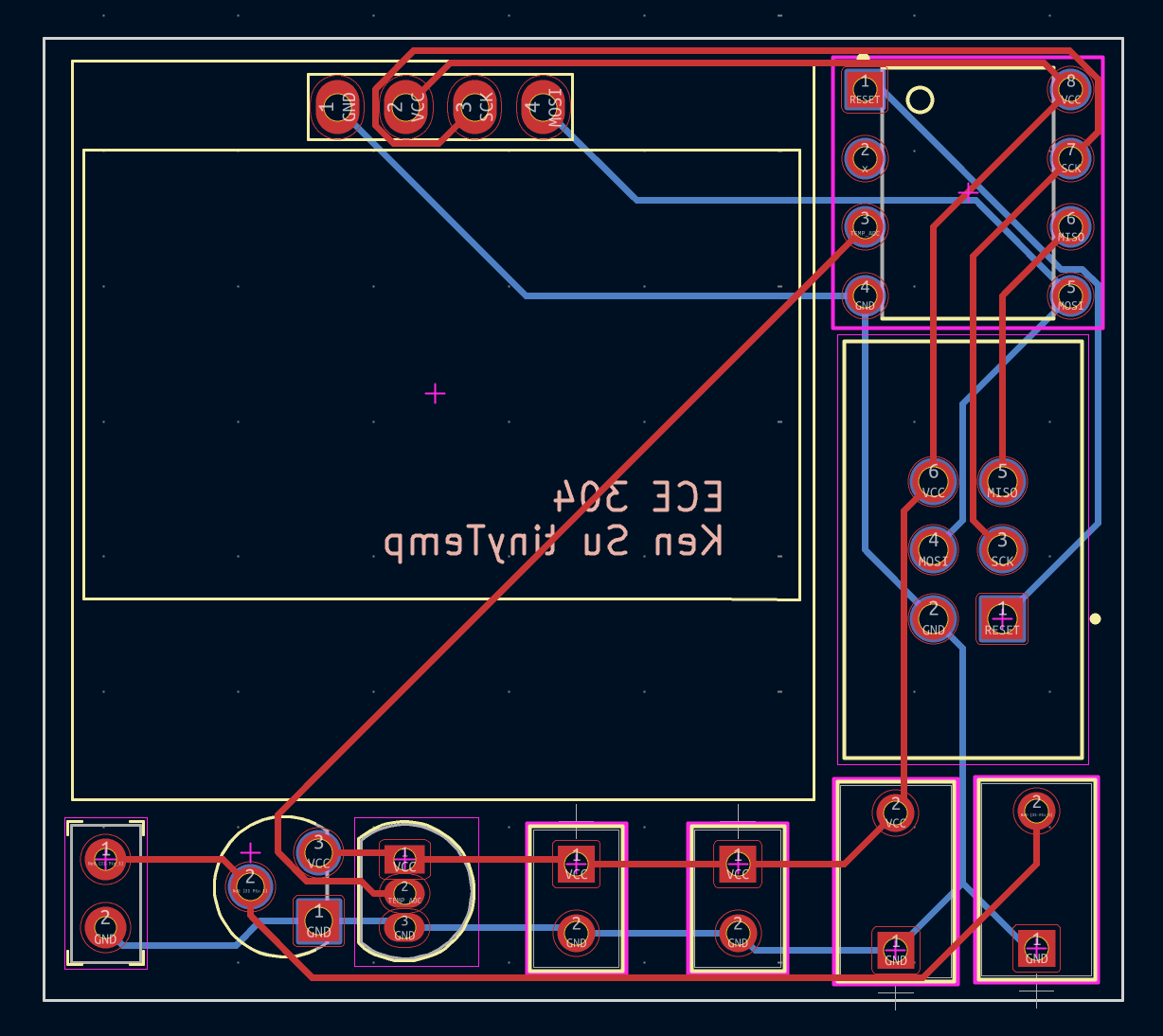
Custom tiny temperature monitor that evolved from an ATmega328P prototype into a compact ATtiny85 OLED PCB.

Award-winning internet-controlled rover that lets users drive and monitor a physical robot from anywhere in real time.
Smart tool tracking that helps teams instantly find equipment, prevent loss, and stay coordinated in real time.

Automated trading system that tests strategies, learns from market behavior, and executes decisions with built-in risk controls.

AI-powered job search assistant that helps people find better-fit roles faster, with smarter resume matching and cleaner tracking.

Personal meal planning app that turns “what should I cook?” into a clear weekly routine with pantry awareness and shopping support.

Turns ideas or 3D models into buildable LEGO-style instructions, making custom creations faster and more accessible.

Classic Pong rebuilt from the ground up in hardware and low-level assembly, showing full-stack systems engineering in action.
From-scratch 32-bit processor design that brings core computer architecture concepts to life in working hardware.
C++ user-level threading library paired with a concurrent disk scheduler that coordinates requester threads and SSTF service.

Encryption concepts implemented at the hardware-software boundary, showing security logic at instruction level detail.

Hardware security testing toolkit for measuring unique device fingerprints and reliability under real test conditions.
Custom tiny temperature monitor that evolved from an ATmega328P prototype into a compact ATtiny85 OLED PCB.
Award-winning internet-controlled rover that lets users drive and monitor a physical robot from anywhere in real time.